Thursday, October 9, 2014

For Discussion: If Macrobrewers are the Enemy, then why do Craft Brewers Copy Them?

There has been a lot of talk back and forth about those pesky macro-brewers pushing in on the turf of the craft brewers, and jumping on trends craft brewers have created. But, interestingly, there have been a few moves by the big guys that have actually started trends in beer making and beer drinking that the crafts jumped right on and followed.

The best example that I can think of is a style that has been around for a while: the Belgian White Ale or Belgian Wit. This has been made for years outside of the US, such as Blanche du Bruxelles by Brasserie Lefebvre (since 1983) and St Bernardus' Blanche. Hoegaarden's flagship is this style, which they claim was developed in 1445. These have managed to use wheat as an adjunct ingredient and perfected into the normally unfiltered, light and fluffy, strong yeast influenced flavor it has become.

Such crafts as Ommegang and Allagash have some pretty good versions of this. The White Rascal from Avery Brewing I enjoyed just last night had all the characteristics of the good ones, as many other crafts that also make one.

But can't we thank their popularity to Coors and Budweiser for their own versions, Blue Moon and Shock Top, which blew the lid off that style in America? If this is not the case then why does my local microbrewpub insist on an orange in mine when they are serving one of their own?

Is this just the craft brewers saying yes, those exist, but I can do it a lot better? here.
Or should they be thanking the macros for introducing these styles? Or, on the other hand, have these American breweries introduced these styles based on success in Belgium, ignoring Blue Moon here? Then explain why every micro everywhere has their own version of it, see list.

What are your thoughts? Can you think of any other styles that the Macro-brewers have made famous in America that craft brewers should recognize? 


Monday, October 6, 2014

Craft Beer Monday Review: 4 Hands Contact High

In my quest for more cans for my collection I crafted up another Six-Pack from Binny's, consisting of 5 cans and one bottle. I got lucky with these, with only one being bad, enough to pour out even, called Old Fashioned Shandy from Leinenkugel's which tasted like a Summer Shandy but with nuts and maple sugar in there. Wow, a really bad tasting combination! 

But enough about that, let's talk about something good! Contact High from 4 Hands Brewing in St Louis. Maybe its because our summer was so cool and wet I really didn't get to enjoy the beers a hot summer usually provided for me. Besides only small amounts of Oberons, Gumballheads and SA Summer Ales I really was missing out, and I totally did not even see this one at all. Maybe it didn't matter, since some talk from some St Louis folks says they didnt see it on the Chicgao area shelves until august anyway. This is so much unlike the other summer beers around here I mentioned, since we often see Oberon early and often just about everywhere, and if not for the new Half Quart variety we might not have seen hardly any at all.

Wheaty and yeasty, but with a hint of orange, this one really does remind me of an Oberon, but it is a little lighter in color and unlike Bells products, it is filtered. But it has more of a hop quick to it than those others mentioned, which really balances it out well. Crisp finish but also a thrist quencher this one does the trick.
In this day and age when the shandies are being thrown at us from everywhere, and not only Leinies.We are seeing Radlers in grapefruit flavors from Warsteiner and Stiegl and Fosters and American beer makers which I try to be fair with with but they are just alcoholic juice boxes as far as I am concerned. So when I read near the bottom of the can "made with orange zest" I was a little apprehensive, thinking it might follow the radler/shandy path, but it did not. It was a winner and a really good beer after all. 

Poured from the can into a Pint Glass, rather cold.
CBC Rating: 5.
ABV%:         5.

Thursday, September 25, 2014

News Item: Indiana Beer News-Clears up some of the questions we have had.

See blog here: http://brewerylaw.com/2014/09/why-you-should-care-about-indianas-problematic-beer-regulations-part-1-of-4/

Monday, September 15, 2014

Craft Beer Monday Review: Finch's Hardcore Chimera India Pale Ale


I hadn't tasted a Finch's in a while, since they are not so easy to find, at least on tap in my favorite establishments. They have always been loaded with hops, especially in the Threadless, but I have to say I was not prepared for the all out hop feast that was laid out for me here.


Boasting an IBV of 9%, the strong alcohol content exclaimed quite an alarming presence of hop, in a way that I would say I hadn't experienced since Half Acre Daisy Cutter or Bell's Two Hearted Ale. I'm not exactly sure if this is good or bad-since I have heard reviews of both of these as more of a harsher character than others. I often even put SN Torpedo in there with them, for its rougher edge.

Its description, (according to Untapped) states: "An American style imperial IPA brewed with Citra, Simcoe, Columbus, Cascade and Mosaic hops. Hardcore Chimera is then dry hopped with over a pound of hops per BBL. Ringing in with over 80 IBU's, Hardcore Chimera's intense aroma and flavor of passion fruit and citrus is balanced out against a hearty grain bill that lends to the beer's deceptively drinkable 9% ABV.

Even though it was a little too much alcohol for me, I still think it is a winner, over all.

CBC Rating: 4.
ABV: 9%.


Saturday, September 13, 2014

Brewery Visit: Church Street in Itasca, IL

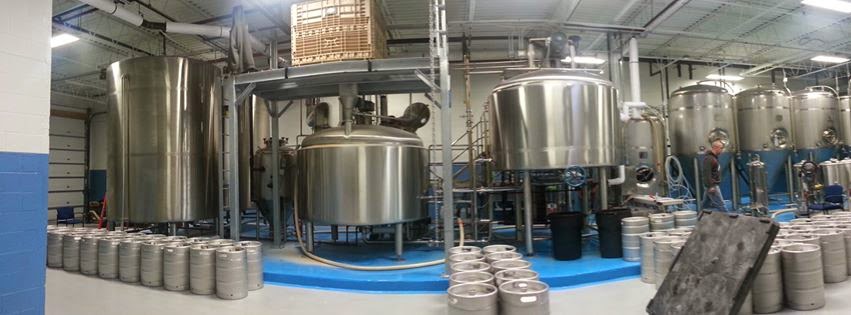
A hidden gem stuck in the back of an industrial park in Itasca we have discovered Church Street Brewing. Originally named for the street in Itasca planned for the brewery, these guys instead do it all here, offering a variety of beers available for sale in local liquor stores or there at the brewery by the growler or 6 pack too.

We were drawn here by others who had visited and mentioned just how small and serviceable the place was: it is simply the front of the industrial space that houses the brewery where about 6 tall tables with chairs are located. Their beer is served and sold in pint glasses or tulips, depending on the ABV, and nothing else. No food, no other beer or liquor.

The hours have been expanding lately but originally were only Friday from 4-7 PM. Now you can visit on Thursdays, Saturdays and Sundays too. The brewers and employees are around, as well as the owners. We sat and enjoyed a pint with co-owner Lisa Gregor, who talked about the brewery and explained the decoction process to us, which is unique to American brewers.

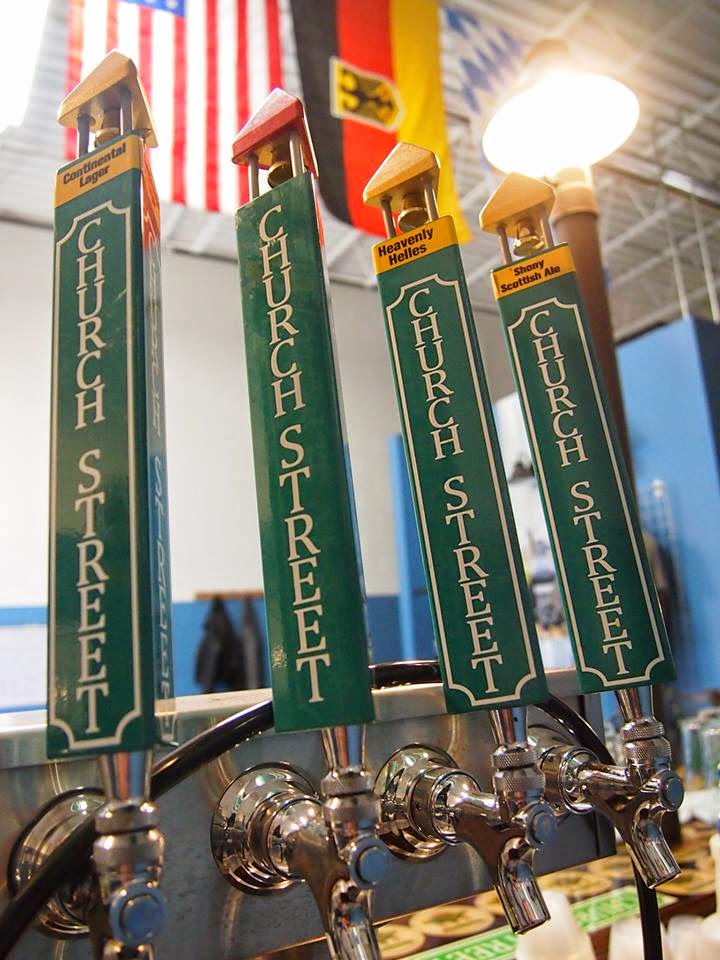
Their beer covers a variety of tastes, but remain the classic European styles: their flagship, Heavenly Helles, is a bolder flavored beer that uses, like all its beers, European ingredients, yet stands at 5.4% ABV. Also offered are its two IPAs: Brimstone and Fire, they offer a milder Continental Lager, and, continuing with its religious sounding theme in beer names, Heretic Heffeweizen.

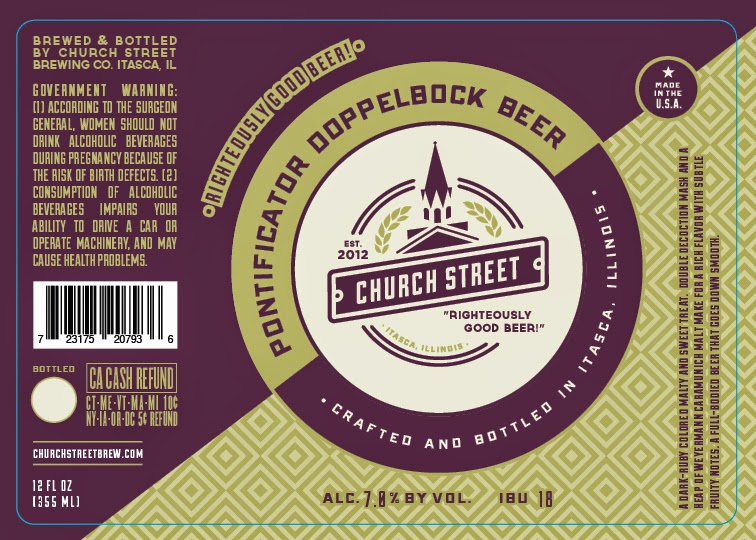
My favorites personally are a regular offering, Tales of the Shony Scottish Ale and last winter's seasonal big hit: Pontificator Doppelbock. Both sweeter, carmel, and very little hops, but the
Pontificator packing a big punch with its 7%. 

New label for this winter
Its worth it to stop by the brewery. If you don't have a Church Street growler buy one of theirs or bring in one from a different brewer and they will swap it out for one of theirs (Illinois law). But they have quite an impressive display of all the other brewer's growlers lining the shelves too. I still see my Lakefront Winter one I traded in last year. 

Tuesday, August 6, 2013

News Item: Butcher Shop Brews

Beers made with meat products, or, at the very least added in the initial boil. Some produce the deep red colors and too much minerality, though. From the Weekly Pint, read on...


Aug 6, 2013
Malt, hops, yeast, water... Bacon? Meat beers have arrived.
beers2Vegans, brace thyselves. Beer is food, more than ever before.

When it comes to brewing, the use of meat products is neither
rare nor novel. Animal products such as isinglass 
(dried swim bladder of fish) and lactose 
(sugar derived from milk) have been used as clarifying agents
and basic fermentables for ages. Look at it this way. Beer
more or less begins life as a boiled “stew” of grains and other
flavorings and fermentables from herbs to hop flowers to, yes,
even oysters. Brewers yeast, a living single cell organism,
devours the fermentables, leaving behind C02, alcohol, and,
most importantly, flavor. Today, though, a few brewers are
looking beyond routine additives like isinglass to actual butchery for the brewhouse.

World Beer Cup medal-winning Portland brewers Alex Ganum (Upright) and Jason MacAdam
(Burnside) drew inspiration from their carnivorous food cravings for their latest collaboration,
Captain Beefheart, a red ale brewed with—you guessed it—60 pounds of grilled beef hearts.
“We normally don’t work with savory flavors in beer,” says Ganum. “Flavor profiles for beer are
 traditionally limited to ingredients that are bright, dark, acidic or bitter.”

Reason being? Brewing with meat products can pose problems such as adverse yeast reactions and
an unpalatable minerality. But, due to their low fat content and lack of collagen, the beef hearts proved
perfect for the beer, Ganum says.

The result? A medium-bodied malty red ale—literally, blood red—with faint minerality and the main
dish, Ganum offers, “beautiful complexity”. This “anim-ale” trend isn’t exclusive to Portland. In
2010 Boston Beer Company teamed up with chef David Burke to create a beefheart ale, “Burke in
a Bottle”. Many others have followed in their meaty footsteps including the Bacon Brown Ale from
Uncommons Brewery, Pisgah Benton Bacon Stout, and Brooklyn Brewery's one-off Bacon Beer,
Reinshweinsgebot.

What meat beers have you tried? Tell us here. And read on for descriptions of three recent brews that
put the ‘hop’ in butcher shop.

Captain Beefheart from Upright Brewery: Named in honor of the late musician Captain BeefHeart,
this beefy beer beer was a collaboration project between Burnside Brewing’s Jason McAdam and
Upright owner and head brewer Alex Ganum. Brewed with Turkish bay leaf, long pepper, pound of
salt, and 60 pounds of charred beef hearts, the red ale is medium bodied and malty with hints of
minerality.
ABV: 5.85%
Availability: Sold Out.

Duck Duck Drunk Porter from Breakside: This experimental anniversary beer was made using a
chocolate porter and 100 pounds of roasted Muscovy duck. Its dark mahogany, frothy appearance
yields bittersweet cocoa on the nose. A beautifully balanced porter, with a slight umami backbone
from the ducks.
ABV: 6.1%
Availability: On tap at Breakside Brewery's Milwaukie Taproom.

Riffle Urchin/Uni Ale from Burnside Brewing: First released in December 2012, this German Gose
style wheat beer was brewed with sea urchin, tomato water, and smoked Jacobsen sea salt. The beer is
light-bodied with subtle salinity and brininess.
ABV: 4.9%
Availabilty: Sold Out.

Photo Credit: Pisgah Brewing Company.

Wednesday, July 31, 2013

News Item: Best 25 Craft Breweries in America according to Daily Meal


 You told us, we listened: your picks for who's making the best craft beer

Great Divide Brewing Company
Craft beer was barely a term 30 years ago; since then, the phrase has been uttered by everyone from beer aficionados to the average Joe. Everyone’s talking about it, and everyone wants in on it.


There’s that moment when you try a better beer, a beer that’s not your average Coors/Bud/Pabst/Enter One-Syllable Beer Name Here, and you’re hooked. Not everyone may remember exactly where, or when. You may not even remember what beer it was. But much like a 1-year old who tries his first bite of birthday cake and has his first real taste of sugar, you know you’re never going back to that other beer again.

Craft beer was barely a term 30 years ago; since then, the phrase has been uttered by everyone from beer aficionados to the average Joe. Everyone’s talking about it, and everyone wants in on it.
And everyone has a favorite.
We couldn’t have found more variation when we began to survey our craft beer experts and readers about who they think deserves to be called the best craft beer in America. We asked some of the country’s leading craft beer experts (can we have that job?) for their suggestions of which breweries they thought were among the best in the country. Their nominations included breweries of all sizes, regions, and styles. After all, narrowing down a list of 2,538-plus breweries (the latest numbers from the Brewer's Association) to a mere top three nominations is no easy feat. After we picked through the 72 nominees we received, we put the vote to you, the readers. Thanks to you and the support of these outstanding 72 nominees — who cast more than 11,500 votes — we got our list of the best craft breweries in America.


Wednesday, June 5, 2013

News Item: Local Watering Holes

A little piece from Yahoo! News that looks interesting. Sure, I totally agree with the first entry as you will have seen from my previous posts. But I have heard a lot about Fountainhead and their rooftop beer garden as well.

Let me know what you think or if there are others worth mentioning!


Chicago's Beer Gardens on Nation's Best Lists

By Janoa Taylor | Yahoo! Contributor Network


With a growing craft beer scene and great summer weather, Chicago's beer gardens have grown in popularity over the years, and now one has landed on Food & Wine's list of the best beer gardens in the U.S. Want to experience Chicago's best? Head over to Sheffield's Chicago in Lakeview.

Sheffield's Chicago One of Nation's Best


Their craft beer selection is out of this world -- you'll find Founders, Goose Island, New Holland, New Belgium, Revolution, Three Floyds, and much more. Each month, a different brewery is selected as Beer of the Month, and a pint will only cost you $4.
Need more to convince you of Sheffield's greatness? Check out the ancient tree that juts out of the center of the beer garden. It towers over the middle section, giving much needed shade in the summer, as well as an earthy feel to your visit. There are also plants lining the wall above rustic, wooden picnic benches. Sheffield's is also known for some of the best barbecue in Chicago. They make two awesome barbecue sauces in-house --
the Memphis will satisfy those with a sweeter tooth, and the Texas will spice up all the others.
Find Sheffield's Chicago at 3258 N. Sheffield Ave and School Street.


The Village Tap  

Located at 2055 W. Roscoe St., it has become one of the city's favorites since opening in 1990. Besides a draft list boasting 25-plus beers, the beer garden is open year-round and has a fireplace and TVs for catching the game. It's definitely a neighborhood hangout, with ivy covering the patio walls.


Fountainhead 

Located at 1970 W. Montrose Ave., is another key Chicago beer destination. Their beer garden is a tad smaller, being a rooftop garden, but the beer list puts it at the top. Draft Magazine lists Fountainhead as one of the country's best beer bars, with a stunning menu boasting close to 200 beers. There are 26 craft breweries rotating on draft,
and a killer bottle and can selection includes Bell's, Lagunitas, Three Floyds, Stone, and more. Their beer garden is seasonal, and the Fountainhead Twitter feed says it's open for 2013.


Janoa Taylor is a freelance writer with a background in business and finance. She offers a unique local perspective
gained from years as a Chicago resident.


Copyright © 2013 Yahoo! Inc. All rights reserved. | Yahoo! - ABC News Network | /

Monday, June 3, 2013

News Item: Craft Beer: A Hopumentary | Cool Material

Interesting little story that ran on Cool Material this weekend, from the Left Coast for a change. 

Craft Beer: A Hopumentary | Cool Material

Monday, April 15, 2013

News Item: Some Bars to Hit in Chicago North of Logan Square (As Seen in ChicagoNow)


A Chicago Bar Crawl in Search of Old Style and Authenticity


Have you ever been driving north down Milwaukee Avenue and noticed that the moment you pass the Logan Square Blue Line stop, there is an abrupt absence of young white people: so abrupt, in fact, it feels like there’s some sort of invisible forcefield, as if the music of Vampire Weekend simply bounces back into the atmosphere, rendering anything north of Kedzie totally unliveable?
Today’s hipsters move to Chicago in search of authenticity. But here’s the thing: they limit themselves to certain neighborhoods to such an extent that they never allow themselves to see the real, salt-of-the-earth city made famous by Algren and Royko and Dybek.
So, in the name of cultural ambassadorhood, Dispatches From the Northwest Side has created a Milwaukee Avenue bar crawl itinerary for those in search of a real Chicago experience. It begins north of Addison and takes you all the way to Devon, farther and farther from the hipster center of Logan Square. If you go with an open mind, don’t be surprised if you find yourself, by your third or fourth Old Style, having an actual, earnest, unironic good time.
Kennedy’s—3734 N. Milwaukee Pat Kennedy, from Co. Clare, Ireland, is the quintessential bartender—he knows a little bit about everything. There is nothing about Chicago politics or sports that he can’t discuss. And if you can ignore the fact that this place is on an abandoned strip of Milwaukee Avenue, just below the Grayland Metra station, has no name on the front, and looks disturbingly similar to the bar in Mystic River where Sean Penn shootsTim Robbins in the face, you will be pleasantly surprised. The bathrooms are clean. The jukebox rules. The Guinness is three dollars a pint.
Best overheard quote during the Chicago Teacher’s Strike: “I’d take that Karen Lewis broad more seriously if she didn’t wear her hair in ‘dose crazy corntails!”
kennedy's pub
The Windsor Tavern—4530 N. Milwaukee Avenue  This little place has surprisingly good quesadillas, a nice beer garden, friendly regulars, and a religiously devoted group of Bears fans.
Best quote overheard circa 2005: “’Ey Bill! Didja see that homo cowboy movie?”
brokeback
The Capitol Night Club—4244 N. Milwaukee Avenue  I have a Czech friend  who once demanded to know why Americans always smile in photographs. “Why do you have to show all your teeth like that?” she asked. “You’re not really that happy, and you know it!” It’s this distinctly Eastern European dark worldview that makes me love the Capitol Club. Although it is awash in neon and stripper poles and populated by the young and beautiful of the Northwest Side’s Polish community, the bar has a post-Communist air to it, a hangover of suffering and privation. Here you will drink and you will dance, but all with a trudging purpose, and never forgetting the futility and ultimate darkness of human existence. You won’t fit in here, and unless you are tall, blonde, Slavic, and wearing six-inch heels, no one will talk to you. And that is as it should be.
Fischman’s Liquor—4780 N. Milwaukee Avenue At this point, you are realizing you have crossed into the Hinterlands. There is no Urban Outfitters for miles around, the CVS across the street doesn’t even sell mustache wax, and you are going to be thirsting for a reminder of your former life. Fischman’s, with its selection of craft beers and Thursday night food trucks, will return you to a place of hipster equilibrium. You will still probably get stared at, though.
Best overheard quote: “Malort dis guy’s ass—NOW!”
fischmans
Zachary’s—5368 N Milwaukee Avenue  Generally, I avoid bars with wall-to-wall carpeting. But how can you go wrong at a place that provides plastic seating out front that looks ripped out of a Greyhound station? And that’s open til 5 a.m.? Actually, on second thought, you might want to save this place for the very end of your bar crawl. I’ve never been here before 2 a.m. and can’t vouch for its safety before the late night crowd arrives.
zachary's
The Thatch--5707  N. Milwaukee Avenue If you come here, you will be the only American in the place. But if you tip well, behave yourself, and buy a drink for the person sitting next to you, the Irish who hang out here might choose to accept you.
the thatch
Three Counties--5856 N. Milwaukee Avenue My favorite part of this bar is the little beer garden out back, which is usually filled with old men in gleaming white gym shoes and nylon jackets, leaning together smoking cigarettes and talking Cubs baseball.
3 counties
Jet’s Public House—6148 N. Milwaukee  Since this bar is full of alpha males in sweatpants, it’s no surprise that there’s no better place to watch a Hawks game.
Overheard quote: “Can I get the cheese basket, hun? But instead of the curds, can I double up on the mac n’ cheese bites?”
jets

  • Meet The Blogger


    Jessie Ann

    Jessie Morrison is a writer and high school English teacher from the Northwest Side of Chicago. She is a graduate of the University of Illinois at Urbana-Champaign and holds an MFA in Fiction Writing from Columbia College. Her fiction and essays have appeared or are forthcoming in The Madison Review, The Chicago Reader, McSweeney's, Great Lakes Cultural Review, Hypertext, Word Riot, Hair Trigger and other local publications. She lives with her husband, Denis, in the Old Irving Park neighborhood.

Wednesday, April 3, 2013

News Item: Recent Beer Inventions

I don't need the inventions, just more beer I think. But anyway, I grabbed this from Glacier Design Systems. 


beercharger.jpg

The brewing of beer is a technology as old as civilization itself. Since its inception, mankind has steered its innovative mind toward the betterment of this process, as well as making beer more pleasurable to drink.
Many inventions have come down the line, from the beer tap to the beer hat, yet the process of brewing beer (and drinking it) has remained unchanged. The popularity of craft beer is also spawning new ideas to make beer more interesting.
If you thought beer-tech innovation has reached its zenith, here are five recent examples that might change your mind.
 
Cold beer cell phone charger
The Epiphany onE Puck is a gadget developed by a group of “technologists and business professionals” looking to solve that age-old problem of how to charge a cell phone with a cold beer.

It works by way of a Stirling engine, which is powered using heat disparities, and has two sides: one for hot and one for cold. It works independently and does not need to be plugged into a source of electricity to work. Stirling engines are nothing new; they were invented by Robert Stirling in 1816. What makes this one interesting is that it’s a technology that combines pleasure with a modern practical effect. It is compatible with iPhones, Androids, all iPods, and any USB-charged electronic device drawing 1 amp or less. Now that is one fierce beer coaster.
 
The Hop Gun
This rocket-ship-looking contraption from the Tröegs Brewing Co. in Hershey, Pennsylvania, is called the Hop Gun. How does it work? The device is loaded down with hops pellets and then purged with carbon dioxide. Inside, the double-helix design creates an inner burst of turbulence that dissolves the pellets as the beer circulates through the vessel. This device will be used in conjunction with the company’s HopsCyclone technology.

 
The Drink Tank Growler
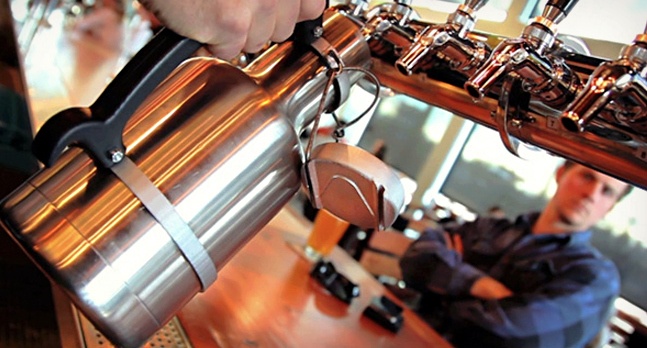
If the new 64-ounce growler law in Florida goes through, then maybe you’d think about buying one of these bad boys. It’s not a typical growler — this one has a tap. The growler sold by Cool Material keeps beer cool with lightweight, double-walled stainless steel. It costs $65, but tack on an additionial $30 for the keg tap lid. It also comes with a convenient handle so you don’t look ridiculous cradling your growler like a baby.                          


Brewpi
Brewpi is a fermentation controller and a modification of the Raspberry Pi computer, a do-it-yourself programmable computer that is about the size of a credit card. The sky’s the limit when it comes to applications for this little computer, but someone up and modified one to fit into his brewing scheme (good job). The step-by-step guide is available online, complete with source code if you feel so inclined to exercise your aptitude for electronics. The computer costs $25, but more money may be needed for additional components.

Once fully assembled, it can control beer temperature to within 0.1 degrees, can log temperature with a nice graph, and is fully configurable from a web interface.
 
The Randall Jr.
A beer Randall is an invention credited to the Dogfish Head brewery. The Randall Jr. is an organoleptic (meaning it relates to properties of food that stimulate the senses) hop transducer module containing a chamber filter that can be connected to a beer tap and filled with flavor-enhancing ingredients. Most Randalls come with two chambers, but this Randall has only one.

It holds one pint of beer, has a twist-off top, and consists of double-walled, BPA-free plastic. Just fill with beer, fruit, spices, hops, etc., let chill, then pour. An inexpensive and practical device, it costs only $20.

Monday, March 18, 2013

News Item: Craft Brewing Timeline

From http://www.brewersassociation.org/:

American Brewing History

Prepro3

  • First known brewery opens in what now is Manhattan.
  • Virtually every Founding Father either made or enjoyed beer.
  • Soldiers in colonial times were reported to have been paid in beer.
  • In the 1800s, the U.S. mostly drank ale.
  • In the 1870s, there were 3,200 breweries.


PostProhibition3

  • 1978: U.S. Congress passes H.R. 1337 exempting a certain amount of home-brewed beer to be brewed for personal use. There were 42 brewing companies (that owned 89 brewing facilities between them).
  • 1979: Deregulation of Prohibition era restriction helped to rebuild America's brewery population
  • Lager is the dominate beer drank in the US


Todayscraft3

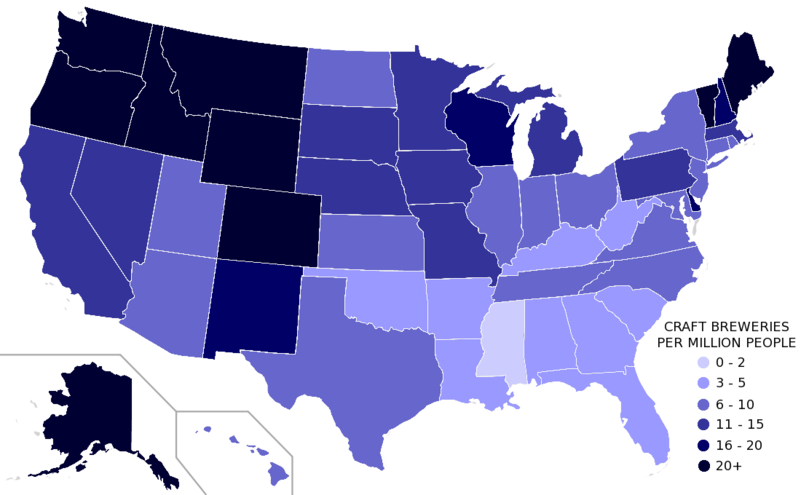
    File:Craft Breweries Per Capita (US).png
  • Today 97% of the more than 2,000 breweries in the U.S. are small and independent.
  • American tastes are changing. Look at coffee, tea, cheese, chocolate, bread and yes, beer. The public wants choices and flavor and diversity in the category of brands that they buy. For example, Nielsen research confirmed that beer drinkers are shifting to more robust beer styles and that seasonal beer is one of the top selling craft beer categories.
  • American Craft Brewers are known for making fuller-flavored ales and lagers and are revered worldwide for their innovation of classic beer styles.
  • Small and independent craft brewers are known for being passionate and innovative makers of fuller-flavored beer.
  • The Brewers Association has defined more than 100 beer styles.
  • Craft brewers are amazing community citizens, contributing millions of dollars to their local communities and providing an estimated 103,585 jobs all across the U.S.
  • On average, most Americans live within 10 miles of a brewery, and hundreds of thousands of people have toured or tasted at their local brewery.
  • American craft brewers are recognized for making some of the best beer in the world.  The Brewers Association reported record exports of American craft beer in 2011—which totaled over 110,000 barrels of beer and was valued at an estimated $23.4 million. This was a dramatic increase of 86 percent by volume and 97 percent by dollars over 2010 exports.
  •  

Craft Brewers' Challenges

9.1% Overall beer salesThe U.S. is a beer-loving nation first and foremost. Sales figures show 2011 U.S. beer sales surpassed sales of wine and liquor combined. Note that American craft brewers, defined as small, independent and traditional by the Brewers Association, have seen continued growth, yet have only captured approximately 6% of overall national beer sales. Craft brewers, against many odds, have been a successful business sector despite a decrease in national beer sales.

To put things into perspective, sales for craft brewers ($8.7 billion in 2011) were similar to sales of Champagne in the U.S. at that same time. Despite these numbers, the local brewpub, microbrewery or regional craft brewer has been beating the odds amidst some very tough challenges.

Monday, January 7, 2013

Craft Beer Monday Review: Revelry

Happy as always to find another offering from my favorite brewery from the Western Suburbs, Two Brothers. They have been pretty consistent with their beer-good ales: pales and IPAs, as well as consistent quality in their seasonals as well as Domaine Dupage which I haven't found anyone matching in flavor and uniqueness. But now for Christmas I found this, at Binny's, and was looking forward to seeing what all the fuss was about (the fuss was a 14.99 six-pack price).

Labeled as an Imperial Red Ale, and boasting a 9.5% ABV, I had a feeling this was going to be a rocking strong brew, and quite unique. It certainly turned out to be exactly that. Not surprising, I suppose, since besides DD, Two Brothers also have Cane and Abel on their resume, which is also a unique flavor I have not experienced elsewhere either.

I didn't want to go too much into the other beers listed on the 15 for the 15th anniversary this year, and not because I was only really fond of a couple- the Old 1713 was awesome plus the 91 Shilling was also very tasty (OK, I love those Wee Heavies).

But I will give them credit for introducing these beers this year, because I think they wanted to show their versatility and give something to the loyal fans, although a bunch of them I had no taste for.

But it was the 15th of the list, as they were saying all along, that would be something that has never been introduced before and would be substantial, and I think it definitely is that.

Now how can I describe it? Really sweet and malty, but with enough hops to make it bold in the bitterness too. There is, no doubt, a large amount of alcohol here, a liquor smack in the head. 

Now, I come to a problem here. I have to rate it, which I am willing to do, because looking at the categories normally used to describe beer this one hits them all very well. But the problem here is what I often see with many High Alcohol beers-it is just not my thing. Yes, I may try one again, but it would be my first of the night and I would follow it with a bunch of 6% beers, because that is what I like the most.

CBC Rating: 4. Again, it is worthy, but I just don't give it a lot higher than that because it is very limited in its uses.

Saturday, December 8, 2012

Brewery Visit: The New Glarus Brewery-Home of the Spotted Cow

I finally made it up to New Glarus, Wisconsin, which is a must see for those of us who have been enjoying the delicious Spotted Cow and Moon Man and Staghorn, etc. for so long. Unfortunately it is kind of off the beaten path, especially if you are traveling from Chicago, it is a little more west than I was expecting, Still it was only a couple hours away.

"Indigenous" is their motto, and this is reflected throughout with all the logos and items sold in the gift shop. It is a very clean and sparse place, and they give you a self-guided tour, which just pretty much allows you to walk around not exactly sure what you are seeing-very little descriptions anywhere.

So, basically, you can tour the building and look in the windows, go to the gift shop, and sample the beers in a couple different ways. I chose the small sampling glasses, which include three fill ups and keep the glass. The other choice was the large pilsner glass, which is also nice, plus one fill-up. Since I wanted to try a few I chose the little sampler.
The tasting room is long and well lighted and you can also choose to step off into a nice little beer garden. There was a lot of construction going on to expand the place, maybe put in a restaurant ?  Also there was a beer shop with their normal beers plus others right off the parking lot, which was convenient.


The choices we were given were the standards and a few extras:
1. Spotted Cow
2. Fat Squirrel
3. Two Women
4. Moon Man
5. Hometown Blond
6. Raspberry Tart

Although I have already tasted them all plus a few more I chose the Fat Squirrel, the Moon Man and Hometown. The Fat was a little sharp and unexpectedly crisp, not what I was expecting in a heavy malt beer. In fact, I may say I was a little disappointed there. I went next with a hoppier Moon Man, which I really enjoyed, as usual, and finally an old favorite, Hometown Blonde. I really enjoyed that one too. I guess I was expecting more out of the first one or maybe I could have gone the other way.

+


Now for a little editorial about New Glarus Beer: For me, I think they could spend more time looking at what the marketplace is doing to see if they are successful. Then again, maybe it is some of the flavors that appeal to me and those that don't that have formed this opinion for me.  New Glarus likes to push the envelope a little in some ways, but then doesn't go too crazy like most craft brewers do in others. Plus, they choose to lock in on other things that I wouldn't do. For example, they always have a sour (or vinegary, as I like to describe it) beer available, as a specialty beer (look at Enigma and other sour browns). I don't like these and will never buy one (I have tasted a few and I don't like them, Sam I Am.) But, they only have 1 stout as a seasonal (Road Slush), no regulars. The black Top and Moon Man are the hoppier offerings but the black top is heavily malty so it puts neither anywhere near an IPA, which is what every micro-brewer is producing these days. I appreciate their efforts into lagers and pilsners, plus Spotted Cow is lighter and refreshing, but it is also along the lines of a fruity kind of idea, which this brewery seems to do a lot more often.

It is interesting too that they have locked in on Black Top and Two Women, which have appeared out of nowhere and are now year round regulars, yet I can't see they are that popular. Plus it also seems that the Dancing Man is like the only decent wheat offering yet I can never get it either.

I am glad I went up there, but overall I must say that it is a place to stop on your way somewhere and not really a destination, no food, nothing else to do. Plusm the local town has a few bars that offer a ton of their beers and all on tap too. My wife, who had never had a SC, is now hooked on them.

Thursday, November 8, 2012

Utopia is Finally Available!

Utopias!


Let me know if you have had it.


Samuel Adams Utopias sells for $190

Published November 05, 2012


The bi-annual version of Sam Adams ultra-strong Utopias beer has hit the market, but you'll have to hunt it down if you want a bottle. Less than 20,000 bottles will be distributed this year.
Typically, Samuel Adams Utopias is released every other year, but this version was released off schedule to help celebrate the 10th anniversary of the beer.
The 2012 version is a blend of beer aged for years in different type of barrels and includes some of the brewery's original Triple Bock from 1993. That's probably why it sells for a whopping $190 a bottle.
"The 10th anniversary release of Utopias is proof that extreme beers have earned a permanent and respected place in the beer universe, a world now constantly evolving with new craft beers and excited craft beer drinkers," said Samuel Adams founder Jim Koch in a release.
So what makes this beer so special?
First, Utopias is 29 percent alcohol by volume (ABV), which is 58 proof. (An average American beer is around 5-10 percent ABV, depending on the brand.)
Also, along with hops, barley malt, yeast and water, Samuel Adams used Champagne yeast, which can survive in the higher alcohol better than a lot of beer yeast. Maple syrup is also used to provide additional fermentable sugars to help raise the alcohol.
"As a result," Koch writes, " ... Utopias invokes the flavors of rich vintage port, fine Cognac or or aged sherry, while feeling surprisingly light on the palate."
Utopias is meant to be sipped and is recommended to be served at room temperature in a two-ounce glass.  It also comes in a cool-looking black decanter shaped like a brew kettle.  The bottle, at 24 ounces, makes for a great collectors item --and something you may want to keep especially when it works out to over $7 an ounce. 

Monday, October 29, 2012

Oktoberfest Taste Test Held and Results are In!

Quite an interesting selection of Oktoberfest beers were available for the tasting, including a couple Germans and a whole lot of American beers. We performed the tasting and agreed on almost all of them, with Steve-o picking up some of the subtleties that I missed a little later in the tasting. Due to time limits (and inebriation) we skipped the Sam Adams and Leinenkugels, having already repeatedly tasted those, in addition to  Spaten, which we normally put at the top of the list anyway.

OUR CHOICES
The Americans:
1. Brooklyn Oktoberfest                                                                And the Germans:
2. Point Oktoberfest                                                                       1. Hofbrau Oktoberfest
3. Great Lakes Oktoberfest                                                            2. Hacker-Pschorr Oktoberfest
4. Leinenkugel's Oktoberfest                                                          3. Wolters Fest-Bier
5. Southern Tier Harvest
6. Sam Adams Oktoberfest
7. Summit Oktoberfest
8. Harpoon Oktoberfest
9. Central Waters Oktoberfest
10. Magic Hat Hex Ourtoberfest
11. New Glarus Staghorn
12. Shiner Oktoberfest
13. Widmer Brothers Oktoberfest


THE RESULTS:
In the end we decided to split apart the different styles, putting at the top of the German Oktoberfests:
1. Hacker Pschorr
2. Hofbrau
3. Wolters

For the Americans, our top 5 were:
1. Point
2. Great Lakes
3. Staghorn
4. Central Waters
5. Magic Hat.

We tasted them back and forth and tried to knock the Point off the top but we had to stick with it. The Staghorn was an old favorite but we were really impressed with the Magic Hat and the Great Lakes too. All in all it was a tough battle.


Lastly, at the bottom and never moving back up was the quite unpleasant and un-distinctive Harpoon. I mean, it looked nice and we were hopeful but we really didn't like it and it stayed at the bottom the whole time, even worse that the Widmer's,  believe it or not.
Also, the Southern Tier Harvest was not even an Okto, but a spicy ale. Quite tasty, there is no question, but I don't think I should have included it after all.

Tuesday, October 16, 2012

Oktoberfest Tasting Will Finally Be Happening!

Yes, we have finally made plans for the Oktoberfest tasting we have been talking about forver. We will be trying out approximately 17 different beers, in sample forms only!

Among those we will try will be the expected ones: Sam Adams, Leinenkugels, the big Germans, plus a few smaller ones: Revolution, Central Waters, Harpoon. Plus, Steve's own homebrew which I'm dying to sample.


 Any thoughts on this year's Oktoberfest offerings? Good ones or bad ones that stand out?

Let me know what you think.

Monday, October 15, 2012

Great American Beer Festival Awards are out!

Some good showings from our Midwest Breweries, although I am wondering about a couple. New Glarus Staghorn an Amber Lager? The Lager/Light category dominated by Pabst, Lite and Coors Light in that order? Mickeys Malt Liquor winning anything? Why bother!
Heres the list, from the Website.


WISCONSIN


Medal Beer Name Brewery Category
Silver Staghorn Octoberfest New Glarus Brewing Co. American-Style Amber Lager
Gold Point Oktoberfest Stevens Point Brewery American-Style Amber Lager
Silver Fixed Gear American Red Ale Lakefront Brewery American-Style Amber/Red Ale
Silver Miller Lite Miller Brewing Co. American-Style Lager, Light Lager or Premium Lager
Bronze Mickey's Malt Liquor Miller Brewing Co. American-Style Specialty Lager or Cream Ale or Lager
Gold Hometown Blonde New Glarus Brewing Co. Bohemian-Style Pilsener
Gold Whole Hog Pumpkin Ale Stevens Point Brewery Field Beer or Pumpkin Beer
Silver Leinenkugel's Summer Shandy Jacob Leinenkugel Brewing Co. Fruit Wheat Beer
Gold Uber Bock Great Dane Pub & Brewing Co. German-Style Doppelbock or Eisbock
Gold Fourteen Fourteen Central Waters Brewing Co. Wood- and Barrel-Aged Strong Stout

ILLINOIS


Medal Beer Name Brewery Category
Bronze A Little Crazy Revolution Brewing American-Belgo-Style Ale
Silver The Weight Piece Brewery American-Style Pale Ale
Gold Brickstone APA Brickstone Brewery American-Style Pale Ale
Bronze Domaine DuPage Two Brothers Brewing Co. Belgian- and French-Style Ale
Gold India Pale Ale Goose Island Beer Co. English-Style India Pale Ale
Gold Cross of Gold Revolution Brewing English-Style Summer Ale
Bronze Strawberry Blonde Ale DESTIHL Fruit Beer
Bronze 5 Lizard Latin-Style Witbier 5 Rabbit Cerveceria Fruit Wheat Beer
Silver Pointon's Proper - An English Mild RAM Restaurant and Brewery - Wheeling Pro-Am Competition
Silver Ebel's Weiss Two Brothers Brewing Co. South German-Style Hefeweizen

MICHIGAN


Medal Beer Name Brewery Category
Silver Hazelnut Coffee Cream Stout Redwood Brewing Co. Coffee Beer
Bronze Kuhnhenn Braggot Kuhnhenn Brewing Co. Specialty Honey Beer
Bronze Udder Madness Bastone Brewery Sweet Stout


MINNESOTA


Medal Beer Name Brewery Category
Bronze Fitger's Framboise Fitger's Brewhouse American-Style Sour Ale
Silver Summit Pilsener Summit Brewing Co. Bohemian-Style Pilsener
Bronze Classic American Pilsner Minneapolis Town Hall Brewery Pro-Am Competition


Wednesday, October 10, 2012

Article about Beer Refrigeration-Myths and Truths

Refrigerator News

Brown Bottles and Tall Tales: 7 Myths About Storing Beer


beer_cans_small.jpg

Beer is the third-most widely consumed drink in the world, after water and tea. It’s also the oldest and most popular alcoholic beverage. With that kind of demand, it’s not surprising that everyone has an opinion—opinions that breed myths about the best ways to store, age, refrigerate, and drink this tasty malted beverage. But we’re here to clear that all up. Here are seven beer myths exposed to the light of truth.

1. If Cold Beer Gets Warm, Cooling It Again Will Make It Stale

Wrong! Like Valentine’s Day, this is a myth brought on by some wily marketing gurus, most likely that brand that won’t stop talking about how “cold” their beer is. The fact is, beer experiences substantial fluctuations in temperature during shipping. Of course, you don’t want these changes to be drastic, and excessive heat will certainly ruin your beer. But the notion that it can only be refrigerated once is a total myth.

2. Sunlight Skunks Beer

True! Sunlight is the nemesis of beer—not only in storage but in the fermentation process as well. Ultraviolet light, in particular, “skunks” beer. But before I explain how, it’s probably a good idea to clarify the difference between staleness and “skunkiness.”
There are “off” flavors, and then there are “skunky” flavors; the former is the result of poor carbonation or excessive heat, and the latter—an odorous, rubbery taste—is the result of a photochemical reaction. Specifically, UV light breaks up acids in the hop plant (an essential bittering agent in beer) to create a nasty little compound called “3-methylbut-2-ene-1-thiol.” or “MBT.” This wordy concoction combines with other sulfurous chemicals to create a horrid odor that is darn close that of a skunk, and even more oppressing in the realization that your precious brew has been ruined. In fact, researchers at the University of North Carolina even found a similarity between the chemical composition of skunked beer and that of the anal glands of actual skunks.
The lesson? Don’t expose your beer to excessive sunlight—or really any light for that matter. It’s just another reason to refrigerate beer, as even prolonged indirect sunlight will cause this very basic chemical reaction. Interestingly, this is not a threat with wine, cider, or mash liquor, as none of these beverages contain hops.

3. The Color of the Bottle Affects Beer’s Shelf Life

iStock_000013874402XSmall.jpgYes and no. It’s not the color of the bottle so much as its translucence that affects beer’s long-term quality. Clear and green bottles allow in significantly more UV light than brown ones. This leads to skunking, as mentioned above. So if you were to store green or clear bottles in complete darkness, then there would be no discernible difference in shelf life from that of a brown bottle in similar conditions.
For whatever reason, green bottles are rife among European imports (Heineken, Stella Artois, Beck’s, and Pilsner Urquell, to name a few). You may even have noticed that these brews are much better on tap (from a opaque keg) than in the bottle—but you could argue the same for any beer.
Once again, this is really only a threat if you don’t refrigerate your beer, as coolers and refrigerators keep sunlight out. It is worth noting, though, that beer that’s been sitting on the store shelf for a while is at a higher risk of skunking or going stale. For this reason, most craft beers include a “freshness” tab that tells you how long it’s been since it was bottled.

4. Beer Must Be Shipped, Stored, and Aged Cold

So, so wrong. In fact, certain kinds of beer—mainly unpasteurized, bottle-conditioned craft beer—can be aged in cellars, just like wine! While cooler temperatures are ideal, most experts agree that anywhere in the 40-70 degree range is fine for dry storage—again, as long as you keep out the sunlight.
Refrigeration is a crucial part of enjoying good beer. But it’s actually discouraged when it comes to long-term storage of corked beers, used mainly for Belgian-style ales. Despite some fridges’ abilities to regulate humidity levels, Beer Advocate explains that prolonged storage in artificial cooling chambers will dry out the cork, allow small amounts of air to enter, and eventually spoil the beer. Best to age these beers in a cellar with moderate humidity, which describes pretty much every cellar ever.

5. Putting Beer in the Freezer Is an Easy Way to “Quick Chill” It

This is true, but with a caveat: Do not ever freeze beer. Anyone who’s ever put a brew in the freezer to chill it but then forgot it was in there knows how disastrous this scenario can be. 70-proof liquor (or higher) is fine, but beer will explode when frozen.
That said, placing a beer in the freezer for a few minutes should be fine. Even then you should be careful, as you may still alter the taste of the beer. According to the American Homebrewers Association, freezing beer alters the molecular structure of the proteins in the beverage. It can also reduce the carbonation level and, in the case of bottle-conditioned brew, possibly kill the yeast.
On a related note, the Eisbock style of beer (like the infamous Naty Ice) uses intentional freezing in the production process. Brewers chill the beer to the point where it partially freezes. They then remove the slushy parts, so as to create a more concentrated and alcoholic beverage (water freezes at a higher temperature than ethyl alcohol). However, this process usually reduces the hop and malt presence in favor of the alcohol itself.
But if you really want to impress your friends, the LG “Blast Chiller” is perhaps the most extravagant—and downright silly—way to cool beer quickly. Despite our well-documented enthusiasm for this awesome feature, it has yet to materialize in a commercially available refrigerator. [Update: It has materialized! LG contacted us to let us know it’s been available since July. Let the good times roll.]

6. Beer Should Be Stored Upright.

iStock_000013345623XSmall.jpgTrue. There are a few reasons why beer should not be placed on its side, and this applies to both corked and capped bottles, and especially to bottle-conditioned brews.
First, the yeast—that magical little organism that eats sugar and poops out alcohol and carbon dioxide (the process of fermentation). Yeast is critical to beer, but the sediment it leaves behind has a way of corrupting flavor; you want the yeast sediment (dead cells and chemical byproducts) to settle at the bottom of the beer. According to Beer Advocate, prolonged storage on the side will create a “yeast ring” along the walls of the bottle. This is why there’s a separate craft to pouring beer, and why you’re supposed to decant the liquid and “filter” out the gunk at the bottom.
Second, upright storage limits the amount of beer that’s directly exposed to air (the neck of a bottle is narrower than the barrel). This slows the process of oxidation and prolongs the life of the beer.
Finally, upright storage is especially important for corked beers. When a beer is stored on its side, the cork—by virtue of being in contact with the beer—will gradually impart its own cork flavors on the beer, and some corks contain chemicals and other ingredients that will exacerbate this “corruption” of the beer.

7. Bottles Are Better Than Cans.

Wrong! Well, actually, this all comes down to personal taste. Canned beer has gotten a bad rap in recent decades because it’s often associated with mass-market, “cheap” beer. However, craft brewers are beginning to can their beer—212 breweries, according to CraftCans.com, including notable names like Sierra Nevada and Brooklyn Brewery.
Some craft brew fanatics even swear by the distinctive flavor of canned brew. The Huffington Post even conducted a blind taste test and found participants preferred the taste of canned beer to bottled three times out of four. But putting taste aside, you can’t deny that canned beer is much easier to store and transport—not to mention, you don’t need a bottle opener.